Polyester & Resin

Dear friends,

Most of the times I use for my parts Polyester resin with a super clear polyester gel coat.

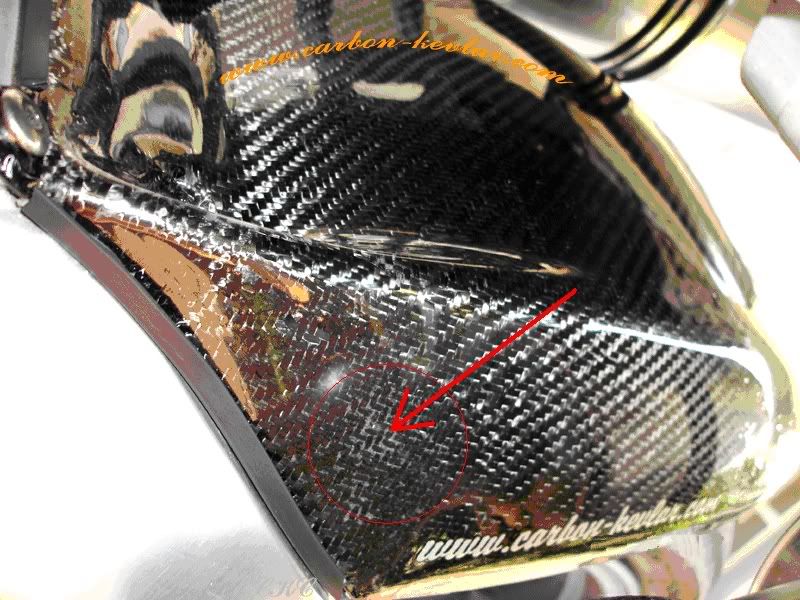
When I use Polyester gel coat but epoxy resin then I have some problems with the bubbles. The problem is when you see it from a short distance you can see air (not bubbles) in the cloth between the spripe lines. I know that the epoxy can’t work together with polyester but I will try to use epoxy gel coat and epoxy resin to see what is happen.

If someone find what is going on or he is already see the problem please inform me.

Thx again all of you

George

Epoxy will stick to anything but PER onto Epoxy might have some problems.

CF tends to be hard to properly fully wet out, so it might be better to leave more resin matrix in a wet lay up process.

If you are VIP, then maybe the resin is to thick or during mixing, you need to pour at a higher height to pop the mini bubbles before suck it into the bag…

hmmmm I will try it!!! thx

That’s exacly the problem I’ve found when trying to use clear polyester gel coat.The surface is smooth, void-free but you can see air pockets under the gel coat. There should be no problem with the epoxy adhering to the polyester, that is a common proceedure these days. The only way I’ve found to get rid of those tiny air pockets between the weave is to use the autoclave. Unfortunately, our autoclave is only 16" diameter (400mm). However, I do get much better results by laminating only two layers, vacuum bagging it and curing it, then add the rest of the layup later.

We have had some success hand laminating CF bike parts, merely using clear poly resin, and a caul plate.

This production process is pretty fast, but does take a bit of practice to sort out the variables.

George: Are you doing wet layup vacuum bagging?

I think the origional question states that although he usually uses polyester, he wants to know how to eliminate air in his epoxy layups. Or did I misunderstnd, and your reply was simply your standard; “Only wet layup bucket 'n brush polyester is the way to go” response (yawn, yawn).
I realise with only 4 or 5 years experience you are a novice at this, but I think it is time to break into the '80s and experiment with other proceedures and then you can help or constructively critisize others!

I dont make cosmetic parts, and production of the items I do make is faster and cheaper using old fashioned KISS methods, so dont really feel any immediate need to try different methods of production. However if I had the time would certainly be interested in trying different production methods.

The thing I find a little strange though is that many newbies posting here dont seem to have a lot of grasp of the basic KISS techniques, which may assist them greatly in areas such as plug and mould making, and of course reducing the unit costs of finished parts.

I apologise for being rather harsh. I wouldn’t call PER/CSM contact molding simple, though. Although you’ve mastered it, it still has it’s difficulties with gel coat problems,pre-release,shrinkage, smell, etc. Perhaps epoxy/VIP is considered the new starting point. I for one can’t use PER at home;the wife would kill me!
I’m definately interested in powder-bound CSM, though. Does it lay down as easy with epoxy as regular CSM does with PER? Can it be used without vacuum and not leave voids? It sounds as if it would be good for contact molding molds where applying a vacuum would be difficult. Do you know of any suppliers in USA?

I am using the Vacuum Bagging infusion method. In case that I am produce a part with a different color like this:

(except the Carbon-Kevlar) then I use Epoxy resin. The polester destroy the cloths.
The Epoxy unfortunately makes air with Poly Geal coat.

\ Nope, Infusion

Does the air your talking about look like the picture below (the one on the right).

Both parts were resin infused. They came from a 100% sealed bag and were layed up identically.

The gelcoat is without problem and the finishes are quite well, the problem comes under the gealcoat when the carbon keeps some air in the stripes. I will put some photos. But JRL yes is something like that.

Neither of the parts above have gelcoat on them. Just E-glass and epoxy.

The only difference between the two is that I didnt overlap my flow medium on the part on the left. I found that butting the edges together, vs. overlapping them didnt slow the resin flow at all. Did several tests to verify that that was the cause of my bubbling issue.

If you see on the red circle you can see the air!!! This happen especailly if you are using other kinds of cloth like Polyseter red cloth 2x2 twill etc