Newbie ?

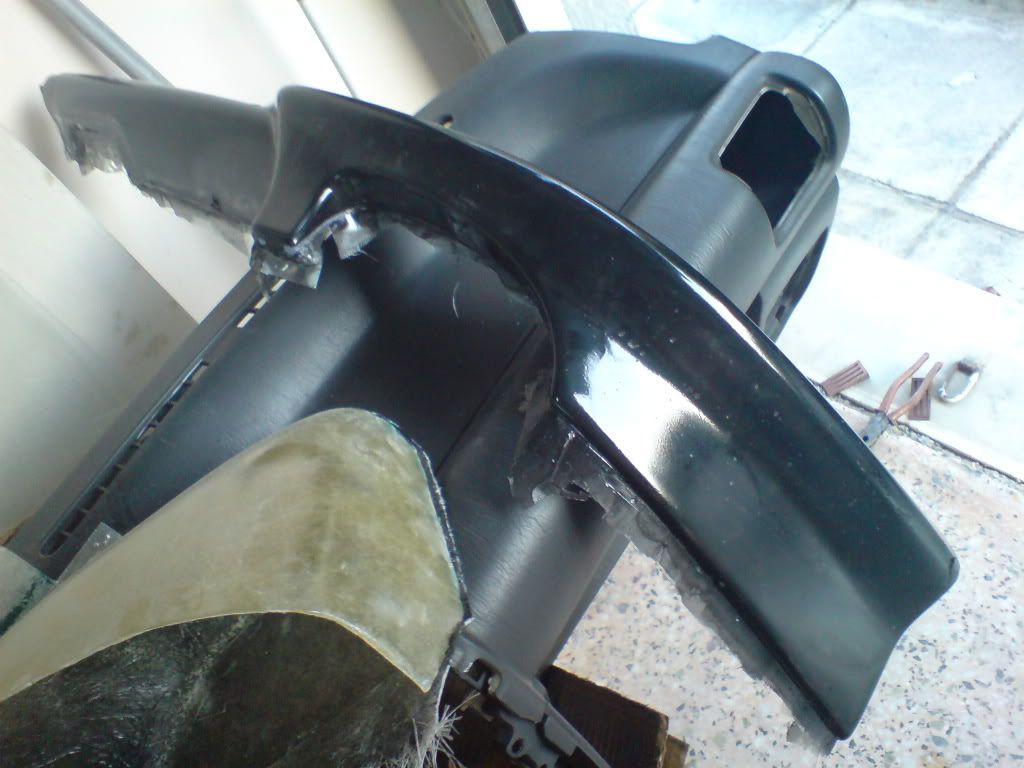
I have a mold that i am making or in the process of finishing.
Was going to start laying fiberglass in, I want to use this mold more than once and was wondering if i had to use mold release?

Also if i have to use Gel-coat?
Any thing i can use instead. (Do it yourselfers)

thanks,
Brandon

of course you have to use mold release otherwise it will never come out of the mold… there`s a variety of mold release agents, but most usual and low budget are pva (liquid, which can be brushed or sprayed, or applied with a specific sponge), or mold release wax, which has the relative directions written on the box (usually meguiars #8)

as for gelcoat, usually its best to be used to create either a finished surface if you dont wanna paint the part, or either way to create a bubble and pore free surface, which can be sanded down before painted or polished.

you can always lay up the laminate without gel, but then youll have to use primer before you paint it or the fiber will show through ,and most likely, there will be small pores which clearcoat will not want to fill. generally, gelcoat is a blessing and a curse. if you do want to BRUSH it in, be generous. real generous. polyester gelcoat is meant to be sprayed. anyway i cannot tell you everything in 1 post, either look in this and some other forums, but i suggest you buy a couple of books from amazon or wherever… good luck!

i got the mold painted and im going to be wet sanding it all the way up to 1000grit, buffing it tell it shines, what should i use to get a high shine by hand?

Then put some sort of mold release? Would car Wax work?

Then what? need help with steps? Would like to aviod needing Gel coat.

In going to be fiberglassing the piece on and painting over it anyways.

Is the mold finished and off the model already? It should not need any painting or sanding.
To make a part in that mold, a release agent needs to be applied just like you should have done with the model so the mold wouldn’t stick to it. Then just lay up the glass, let it cure, and carefully pry it off.

Do you have a master plug and are going to make the mold or a mold (reverse of the finish part) already?

Yes, you need to use mold release and some high temp car wax can work…but apply many coats of it. Let it haze up and don’t buff it all off.

Gel coat is like the egg’s shell…without it you will have just the fiber reinforcement showing and you will never fill all the holes up.

I made the mold out of a plug but did it the hard way (i used aluminium foil fo mold release) Because i used that it wasnt a hundred percent smooth so now i am stuck making it smooth. filling holes with bondo, sanding, more sanding, primer, sand, primer, sand, then paint, and buff.

I got the mold smooth not i need to now what to use for a mold release so the pieces i pull from the mold are smooth and need no to little sanding/filling.

GEL COAT:
-So if i use gel coat: i wont have a million little holes. (smooth Finish)

-If i do not use gel coat i would run the risk of having millions of holes on the suface and would have to fill them in after pulling the mold with epoxy or bondo (would equal more sanding)

?'s:
1.What is the best mold release to use and is there anyplace i can get it local? OR Can i use like Mothers Carnuba Car Wax?

  1. Is there anything else i could use instead of Gel Coat?
    (after mold release put like a coat of thickened epoxy let it set tell tacky then glass?)

Sorry for the confusion!
As you can see im a newbie…ha

Thanks,
Brandon

in your case, PVA would be the best choice, since you have a surface with putty, and generally not a perfect mold. using pva properly will leave you with a glossy surface. pva is a liquid, and you can brush it or spray it on if you have a gun around 1.0 to 1.3 mm needle, or an air brush, and low pressure (around 1.8bar). its the safest release agent, especially for newbies. i’d suggest you stay away from stuff unrelated to the job. Go to a composites store and either buy mold release wax, or pva. it would be a pity to flush all your work down the drain.

if you re not gonna use gelcoat, go buy some fiberglass veil. its a very thin fabric, and you can (or rather,you must) use this in the first couple of layers in the laminate so you’ll get a good surface with no fiber print through. after that, you can proceed with thicker chopped strand mat. you can also buy a colour paste for resins, either epoxy or polyester, and dye your resin black or something (darker colours are easier) so your product will come out black.

for example:

this is a part made with only very thin woven fiberglass, and black epoxy resin, using pva as a mold release.

So Steps would be: (please correct me if im wrong)
From start to finish/1st to last

1.PVA(sprayed/brushed on)OR mold release(Mequiars #8)
2.Then (one-two) layers of fiberglass viel(For smooth finish)
3.Layer(s) of 4oz S glass cloth
4.3/4oz chopped strand mat to desired thickness
5.Let it cure
6.Pop the mold

Also my mold is made of all purpuse fiberglass resin and mat. i going to be using epoxy resin for the piece i will be molding from the mold. Will there be any problem between the two?

what should i use to buff my mold to a high gloss shine?

you got the procedure right, except one thing. fiberglass chopped strand mat and veil DO NOT work with epoxy. only with polyester and vinylester. thats because epoxy does not contain styrene, which breaks up the glue that holds the mat and veil together. with epoxy, you use only woven fabrics.

i would suggest you first use polyester and mats, to get the hang of it, they are much easier to work with and forgiving, and the mixing ratio is a lot more forgiving than epoxy, which has to be measured with a digital scale and be 99-100% correct.

Wax the mold first (even car wax)

PVA if you have it…tricky to get a smooth finish…but doable.

Gel coat (or a few coats of lam. resin)

Reinforcements and wet out with lam. resin

While it is the B stage (rubbery) trim the excess off with a box knife

let it fully cure and then pry and pop the part out

Sand, trim and finish the part.

The first thing I would have any students working with resin would be a timed watching the resin goes thru the stages exercise in a cup.

Stage A: Liquid (a cup with 100 grams of PER)

Add 1% MEKP cataylst to a cup with 100 grams of PER and start timer

Stage B: The resin starts to gel or get rubbery (the time to green trim with a knife) and hot

Stage C: Click hard (should be around 20 minutes to an hour)

Now do the same thing with a cup pf 100 g PER with 5% & 10% MEKP…time those too.

More the resin mass…more the reaction so use less MEKP %

Less resin mass…less reaction so use more MEKP %

So what is best to use as a sub. for Chopped strand mat(weave, weight, ect.) that is compadable with epoxy and what should i use instead of veil and gelcoat that is compatable with epoxy resign

thanks,

The mold materials and final part materials can be different. I believe that was your question.
With a polyester mold, you can make epoxy parts no problem. Vice versa.
Just can’t put epoxy into CSM because they’re not compatible.

there are weaved fiberglass fabrics that are cheap, and usually go by the kilo, instead of by the meter. for mold making with epoxy, i buy a 300 or 400gr per meter plain weave woven roving fiberglass, which costs around 10 euros for 3 meters. a better quality fabric in the same weight will easily cost 3 times more (10 euros per sq meter) but its a lot easier to work with, will conform to curves better, and easier to wet out. you can work around such problems by applying problematic and bitchy fabrics, and then a good one on top, to hold them down (in a wet layup)